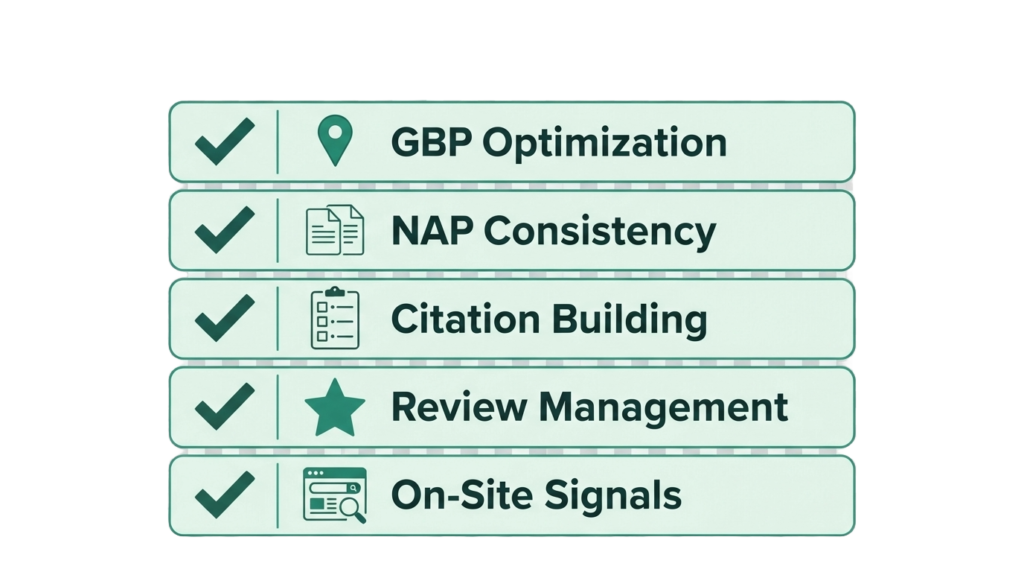
A complete local SEO checklist covers five areas — Google Business Profile optimization, NAP consistency across the web, citation building, review generation, and on-site local signals. Most small businesses have one or two of these half-done and the rest untouched, which is usually enough to explain why a competitor with a worse product outranks them in the Map Pack.
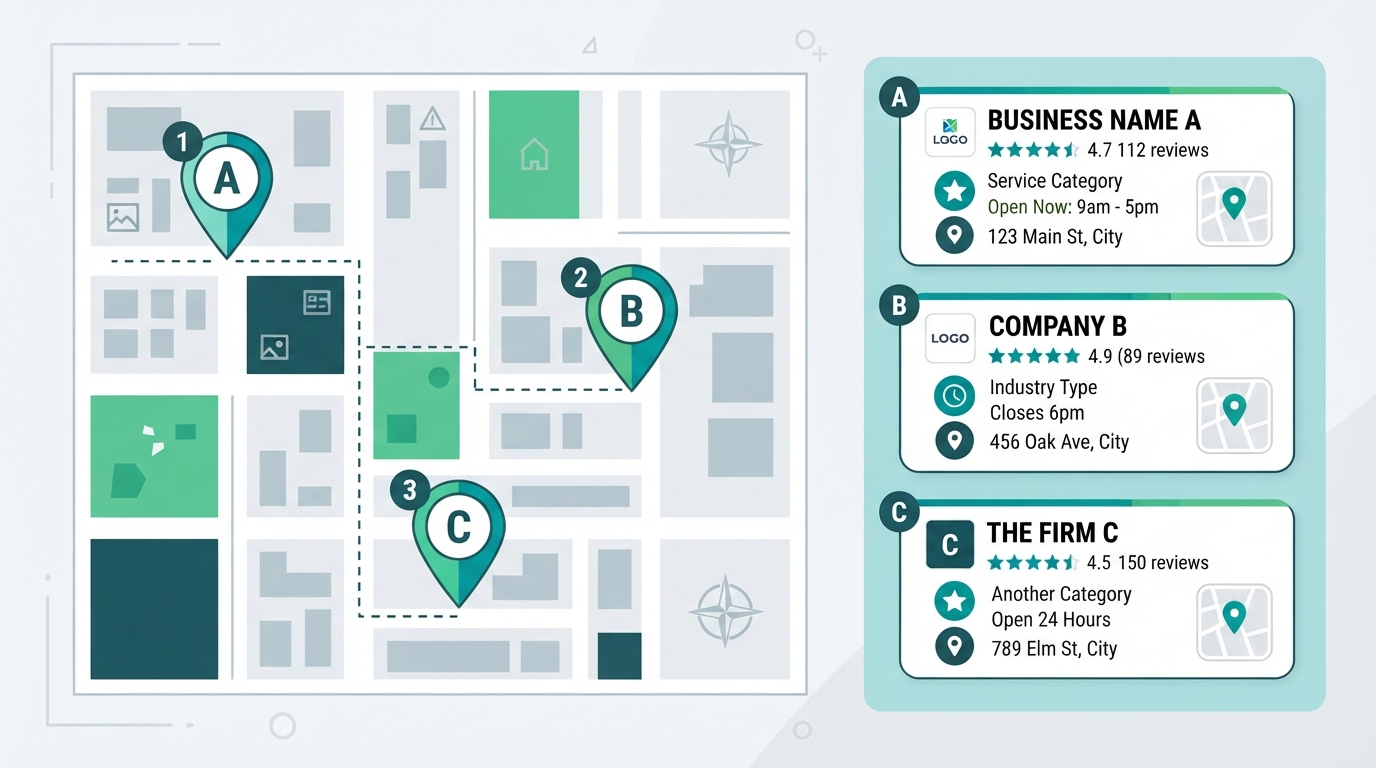
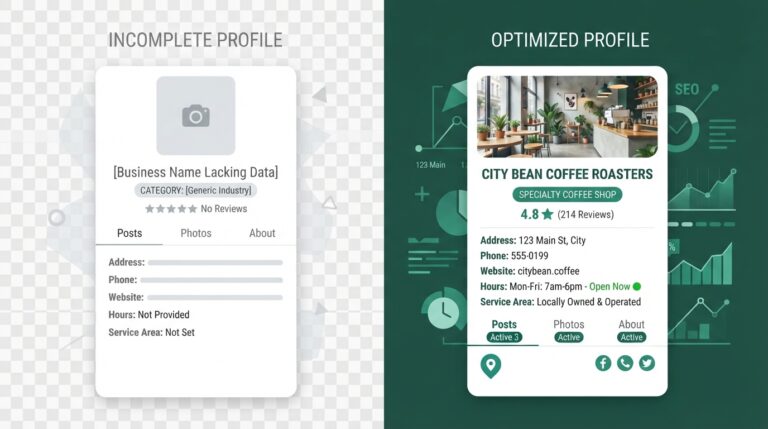
I’ve audited enough small business sites to notice a pattern: owners spend money on SEO tools and blog content before they’ve claimed and fully filled out their Google Business Profile. That’s backwards. For local intent searches — “plumber near me,” “[service] in [city]” — your GBP carries more ranking weight than almost anything on your actual website. Start there.
1. Claim and Fully Optimize Your Google Business Profile
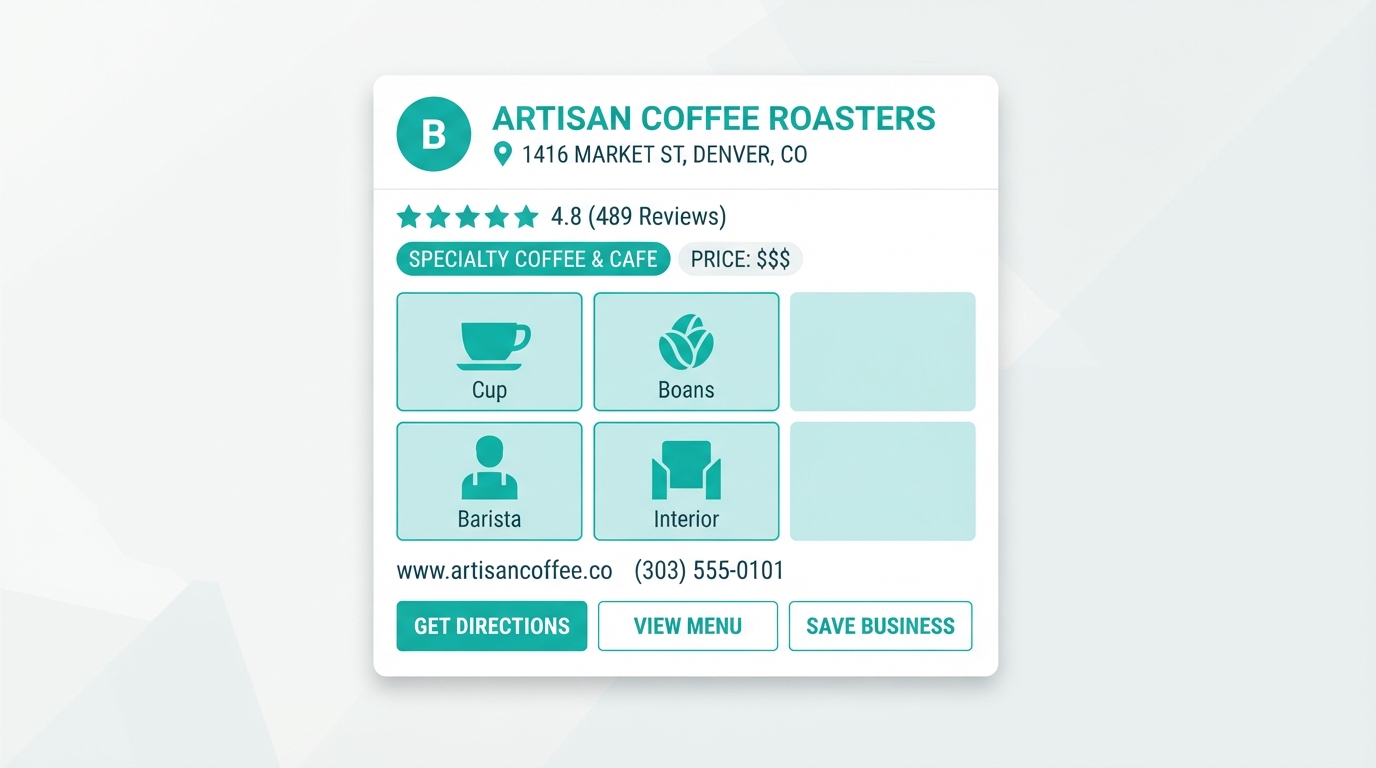
- Claim and verify your listing if you haven’t (Google mails a postcard with a verification code, or offers video/phone verification depending on your business category)
- Choose the most specific primary category available — “Personal Injury Attorney” outranks the generic “Lawyer” for those exact searches
- Add secondary categories for every service you genuinely offer
- Complete every field: business hours, service area, attributes, products/services list, business description
- Upload real photos — of your team, location, and work — updated regularly, not just at setup
We cover this in full depth in our Google Business Profile optimization guide if you want the complete walkthrough.
2. Get Your NAP Consistent Everywhere
NAP stands for Name, Address, Phone — and it needs to match, character for character, across your website, your Google Business Profile, and every directory listing you appear on. “St.” on one listing and “Street” on another seems trivial, but inconsistencies like this are a known trust signal problem for Google’s local algorithm, and they’re more common than most business owners realize — usually because a listing was created years ago under a slightly different format and never updated.
Action: search your business name in Google and manually check the top 10–15 results that show address or phone info. Fix mismatches as you find them.
3. Build Local Citations
Citations are mentions of your business (with NAP) on other websites — directories, industry associations, local chambers of commerce. They function as trust signals: the more consistent, credible places your business is mentioned, the more confident Google is that you’re a real, established business.
Prioritize in this order:
- Core data providers (the sources many other directories pull from)
- Major general directories — Bing Places, Apple Maps, Yelp
- Industry-specific directories relevant to your field
- Local directories — chamber of commerce, local business associations
We go deeper on this in our local citations guide.
4. Generate and Respond to Reviews
Review count and rating are direct local ranking factors, and review recency matters too — a business with 40 reviews from three years ago signals less current activity than one with 15 reviews from the last two months.
What actually works:
- Ask at the moment of highest satisfaction (right after a job well done, not in a generic follow-up email weeks later)
- Make it easy — a direct link to your Google review form, not a vague “leave us a review sometime”
- Respond to every review, positive and negative — a thoughtful response to a negative review often does more for trust than the review itself would have hurt
5. Add Local Signals to Your Website
- NAP in the footer of every page, matching your GBP exactly
- Embedded Google Map on your contact page (and make sure it’s actually pointing to your real location — broken or dislocated embeds are a surprisingly common, easily overlooked trust issue)
- Location-specific landing pages if you genuinely serve multiple distinct areas — never duplicate the same page with just the city name swapped; each needs unique, locally relevant content
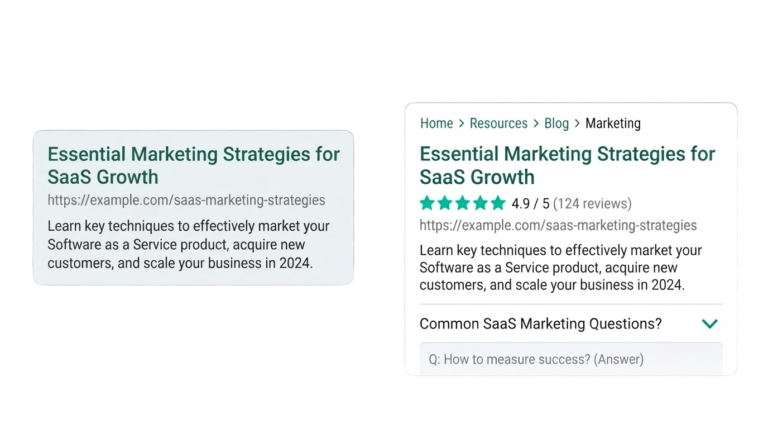
- Local Business schema markup so Google can explicitly parse your business type, address, and service area
The Order That Actually Matters
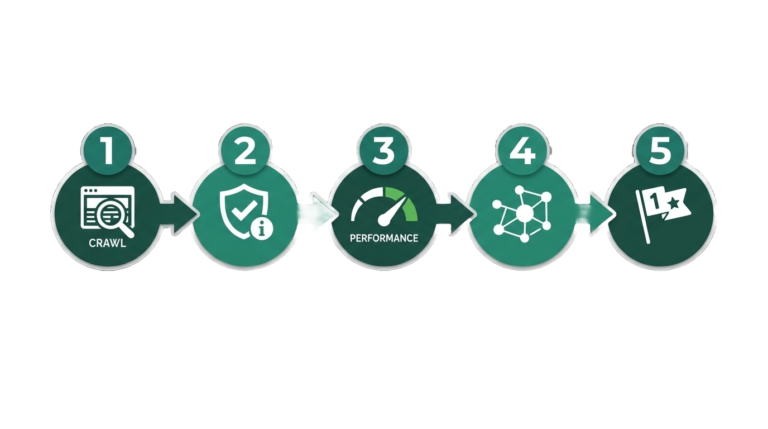
If you’re starting from zero, work in this order: GBP first (fastest, highest-impact), NAP consistency second (fixes compound over time, so earlier is better), citations third, reviews as an ongoing habit from day one, and on-site signals whenever you next touch your website. Trying to do all five simultaneously usually means none of them get done properly.
If this feels like more coordination than you want to manage alongside running your business, that’s exactly the gap our Local SEO service is built to close — we run this checklist end to end and keep it maintained as your business grows.
FAQ Schema-Ready Q&A
Q: What’s the most important local SEO factor?
A: A fully optimized, verified Google Business Profile — it carries more weight for local (“near me”) searches than almost any other single factor.
Q: What is NAP consistency and why does it matter?
A: NAP stands for Name, Address, Phone. Keeping this identical across your website, Google Business Profile, and directory listings is a trust signal Google’s local algorithm relies on — inconsistencies can quietly hurt local rankings.
Q: How many local citations do I need?
A: Quality and consistency matter more than raw count. Start with core data providers and major directories (Google, Bing, Apple Maps, Yelp), then add industry- and location-specific directories relevant to your business.